Inside Exposition Park · walk 5 of 8 ·
The California African American Museum
A state museum devoted to the art, history and culture of African Americans, with a sky-lit sculpture court and exhibitions that change through the year.
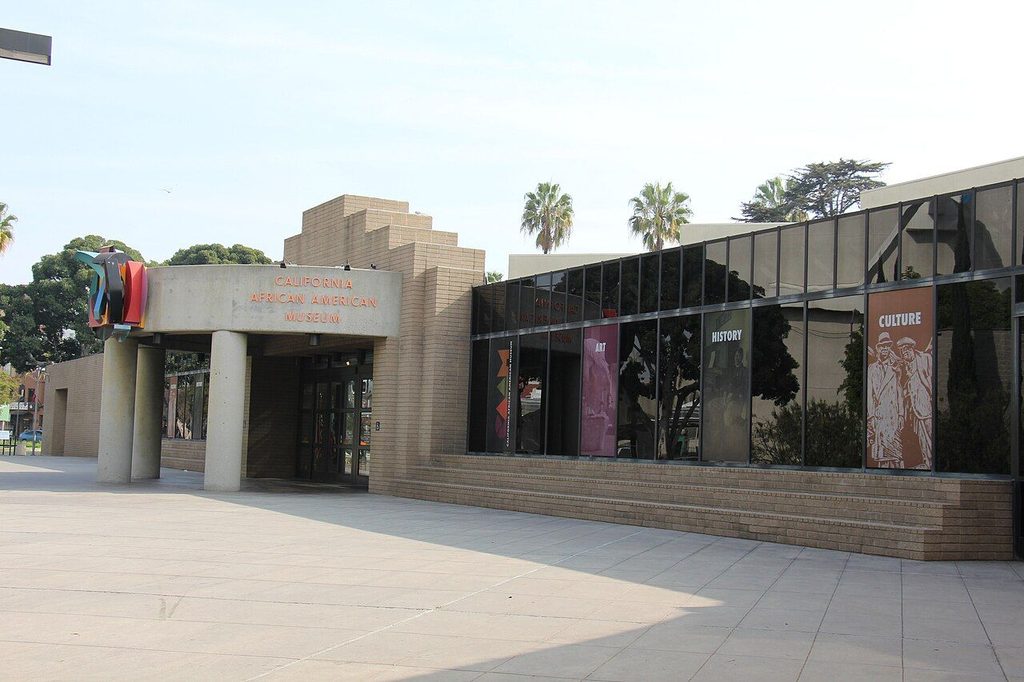
- MetroExpo Park/USC, E Line
- Getting thereE Line to Expo Park/USC, short walk
- BringNotebook, time to read the labels
The California African American Museum, usually shortened to CAAM, stands at the eastern end of the museum plaza in Exposition Park, between the California Science Center and Figueroa Street. It is a state museum devoted to the art, history and culture of African Americans, with a special focus on California and the American West. Compared with its neighbours it is small, and that is part of its appeal: you can see the whole museum in an hour or two, without rushing, and leave with a clear sense of what each exhibition was about.
A museum founded by the state
The museum was created by the State of California in the late 1970s, and it opened to the public in the early 1980s. Its own building in Exposition Park opened in 1984, the year Los Angeles hosted the Olympic Games for the second time, and the timing was not an accident: the city was preparing to welcome visitors from around the world, and the new museum was part of a wider push to show the region's culture.
From the start, CAAM set out to collect and show the work of African American artists and to record the history of Black communities in the West, from early settlers and the migration of the twentieth century to music, film, sport and civil rights. The collection now holds paintings, sculpture, photographs, documents and objects, and the museum has grown its programme of talks, film screenings and family days.
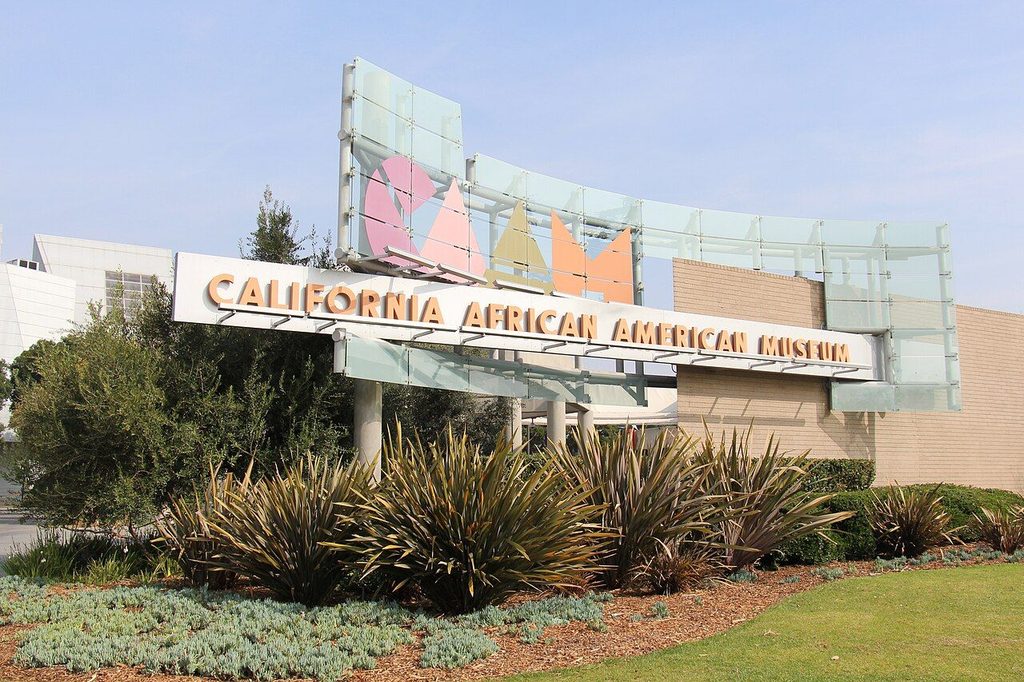
The building and the sculpture court
The museum building is low and long, in pale brick with large panes of tinted glass. Its most striking room is the sculpture court near the entrance, a tall space under a skylight roof, filled with daylight. Large works are shown here, and the court is often the first and last room you walk through. On bright days the light moves across the floor and walls through the afternoon, and the room feels more like a covered courtyard than a gallery.
The building was later renovated, with improved galleries and better ways to move between them. The entrance faces the plaza and the rose beds on the park side, and banners along the glass front name the current exhibitions.
Changing exhibitions
CAAM does not keep a fixed set of permanent galleries in the way the larger museums next door do. Most of its space is given to changing exhibitions, which run for months at a time and are then replaced. A typical visit might include a solo show by a contemporary artist, a historical exhibition built from photographs and documents, and a smaller display drawn from the museum's own collection.
Exhibitions here tend to reward reading. Wall texts and labels give the background to each work or object, and many shows mix art with history, so a painting may hang near a letter, a photograph or a piece of clothing from the same period. Give yourself time to read the introductions at the start of each room before you look at the works.
Because the programme changes, what you see depends on when you go. That makes the museum worth returning to, and it means the best preparation is to look at what is showing before you set out. Exhibitions that deal with difficult history are presented with care, and some may include material that younger children need help to understand.
Next door: Brick and arches on the USC campus
Free entry and practical notes
General admission to CAAM has long been free, which makes it one of the easiest museums in the city to drop into for half an hour. Some special events, talks or screenings may ask you to reserve a place in advance. The museum closes on some holidays and on at least one weekday.
- Allow one to two hours for a full visit.
- Look for public programmes, which often take place at weekends.
- Bags may be checked at the entrance; photography rules vary by exhibition.
The building is accessible, with level entry and lifts. Seating is spread through the galleries and in the sculpture court, which is a good place to rest if you are combining several museums in one day.
Combining CAAM with the rest of the park
Because it is free and compact, CAAM fits easily between longer stops. A sensible plan is a morning at the California Science Center, which covers Space Shuttle Endeavour and its galleries, then lunch in the park, then an hour at CAAM in the quieter afternoon. The museum's position on the plaza means you hardly have to walk between them.
The Natural History Museum and the rose garden are a few minutes to the west, and the Los Angeles Memorial Coliseum rises just to the south. If you are interested in the older neighbourhood around the park, our walk through the Victorian houses of St. James Park and Chester Place starts a short ride to the north.
Across the park from Expo Park/USC
The nearest station is Expo Park/USC on the E Line, a short walk across the park to the museum's entrance. The park has paid parking structures, which can fill early on days when the stadium is busy, so the train is often the more reliable choice. Buses on Figueroa Street and Vermont Avenue also stop near the park.
If you arrive from downtown on a weekday, you can be in the sculpture court within half an hour of leaving the city centre. It is one of the best short museum visits in Los Angeles, and one that changes each time you come back.
Filed in Inside Exposition Park
Walk on: Brick and arches on the USC campus · back to Los Angeles Memorial Coliseum · all eight walks
Thanks for the photos: Jllm06; license CC BY-SA; Jllm06; license CC BY-SA

