Inside Exposition Park · walk 4 of 8 ·
The Coliseum and two Olympic Games
Opened in 1923 as a memorial to the dead of the First World War, the Coliseum hosted the Olympic Games in 1932 and 1984 and expects them again in 2028.
- MetroExpo Park/USC, E Line
- Getting thereE Line to Expo Park/USC, five minutes
- BringWater, sun cover, clear bag on event days
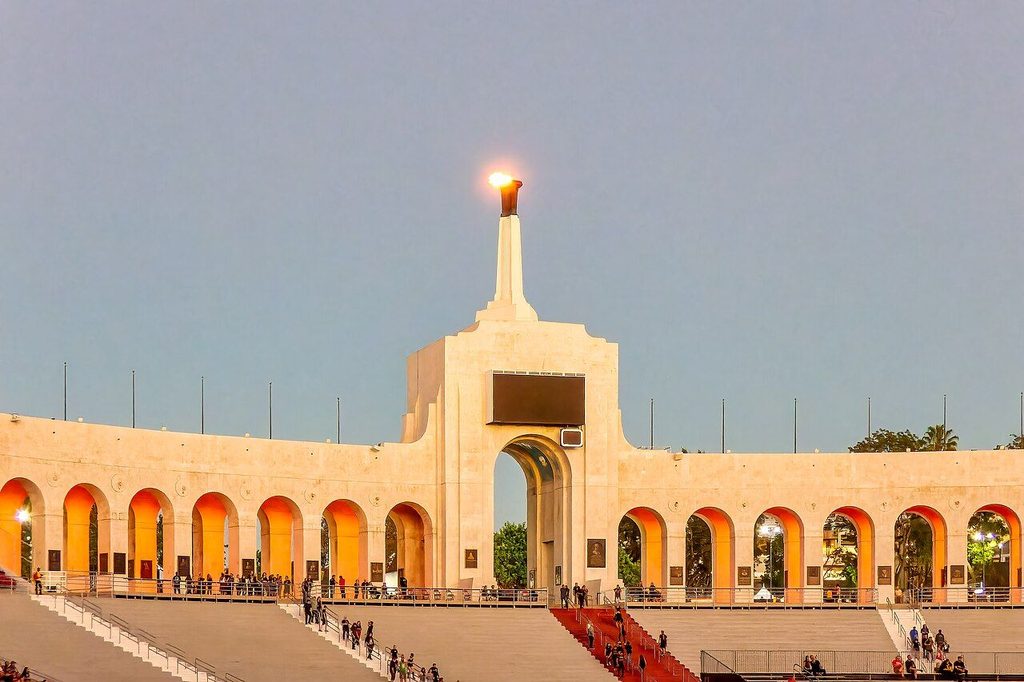
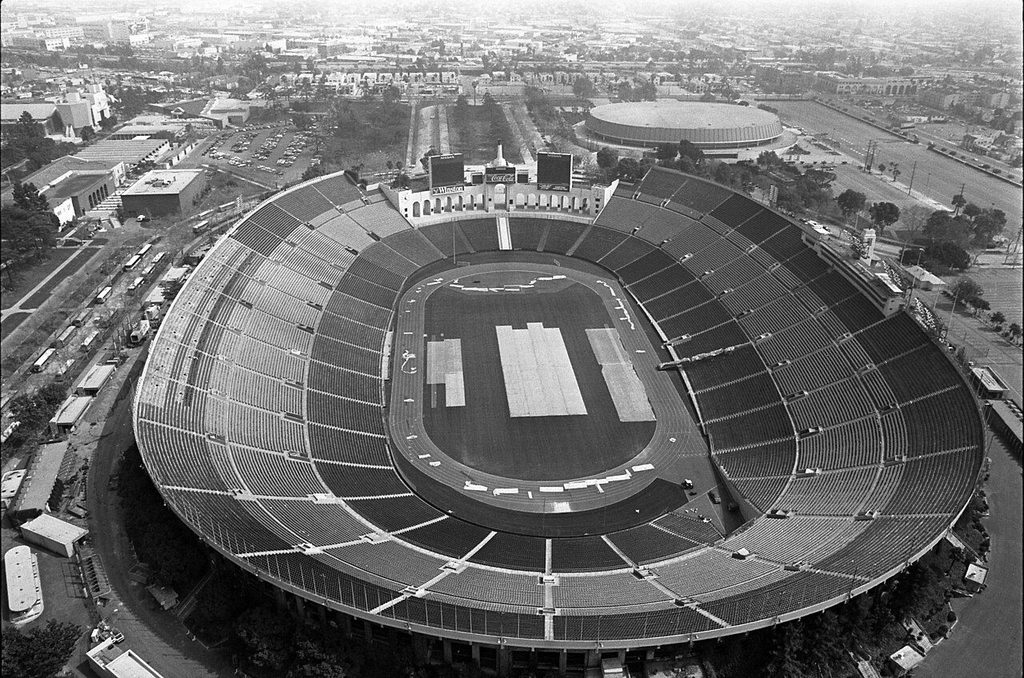
The Los Angeles Memorial Coliseum fills the eastern side of Exposition Park, a huge oval bowl with a row of arches and a torch tower at one end. It is one of the most historic stadiums in the world: few others have hosted the Olympic Games twice, and if the plans for 2028 hold, it will become the first to host the Summer Games three times. Even on a quiet weekday, with the gates shut, the outside of the stadium is worth a slow walk.
A stadium built in 1923
The Coliseum opened in 1923. It was built by the city and county as a memorial to the men of Los Angeles who had served and died in the First World War, which is why the word Memorial sits in its name. The architects designed a bowl partly dug into the ground, so that from outside it looks lower than it is, with seats rising above the field in a long, unbroken oval.
The stadium was enlarged before the 1932 Games, and it has been renovated many times since, most recently with new seating, press facilities and a tall structure along the south side. In 1984 it was named a National Historic Landmark, a status that protects the core of the original design.
The peristyle and the torch
The most recognisable part of the Coliseum is the peristyle at its east end: a long row of arches with a taller central arch rising into a tower, and on top of that tower a large bowl for the Olympic flame. The torch was first lit for the 1932 Games, and it has been lit again for many occasions since, from the 1984 Games to moments of remembrance in the city. When it burns, it is visible from far across the park.
Below the peristyle, plaques and the stadium's court of honour remember people and events connected with the Coliseum. Outside the main gate stands a bronze gateway with two headless figures, a man and a woman, made for the 1984 Games. It is one of the few large public artworks from that year still in place, and it frames the peristyle well from the plaza.
The 1932 Games
Los Angeles hosted the Summer Olympics in 1932, in the depths of the Great Depression. Many countries struggled to pay to send teams across the world, and fewer athletes took part than at the previous Games in Amsterdam. The Coliseum was the main stadium, holding the opening and closing ceremonies and the track and field events.
The 1932 Games are remembered for a number of firsts. A purpose-built village housed the male athletes, and a victory podium was used for medal ceremonies. The city treated the Games as a chance to show itself to the world, and the stadium's arches became one of its best-known images.
Next door: Space Shuttle Endeavour and the Science Center
The 1984 Games
Fifty-two years later the Olympics came back. The 1984 Summer Games were again centred on the Coliseum, which held the opening and closing ceremonies and the athletics events. They were funded largely by private money and sponsorship rather than public spending, and they used many existing venues instead of building new ones, which helped them end with a surplus.
The Games were affected by a boycott led by the Soviet Union, but they drew large crowds and are still remembered as a high point for the city. The torch was lit again in the peristyle, and the bronze gateway was added outside. Several cultural projects of that summer left lasting marks in the area, among them the building of the California African American Museum across the park.
Looking ahead to 2028
Los Angeles has been chosen to host the Summer Olympics and Paralympics again in 2028, and the Coliseum is expected to play a major part, as it did twice before.
In the years between, the stadium continues to host college football, concerts and large public events. Its role in daily life is a big one for the neighbourhood: on game and concert days, tens of thousands of people pass through Exposition Park.
Visiting on quiet days and event days
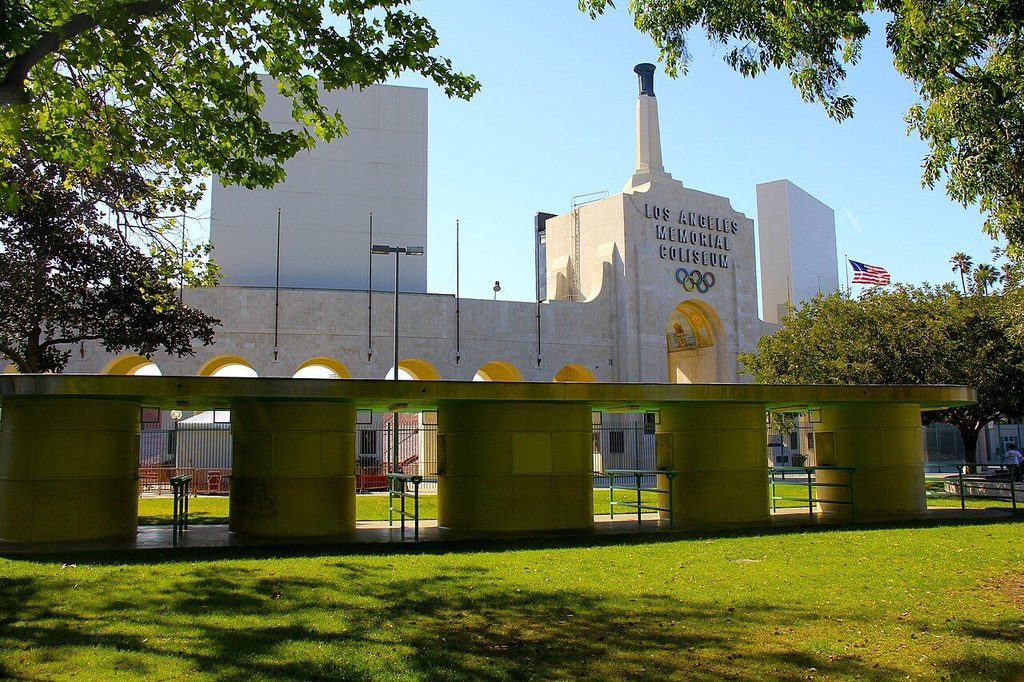
On most days you cannot walk into the stadium bowl, but you can circle the outside, see the peristyle from the plaza and read the plaques at the gates. Stadium tours have been offered at some times. Early morning and late afternoon give the best light on the arches.
Event days are a different place. Streets around the park close, parking fills or becomes expensive, and the E Line trains run full before and after. For the museums, the rose garden or the park itself, a day without a game is far calmer. If you are going to an event, travel by train, arrive early and expect bag rules, which usually limit what you can bring inside.
Expo Park/USC station is the nearest stop, a short walk from the stadium's west side. From there you can also cross Exposition Boulevard into the university campus described in our story on brick and arches on the USC campus, where several buildings date from the same years as the stadium.
Filed in Inside Exposition Park
Walk on: The California African American Museum · back to California Science Center · all eight walks
Thanks for the photos: Sergei Mutovkin from Irvine, California, United States; license CC BY; Thomas Kelsey, Los Angeles Times; license CC BY; MikeJiroch; license CC BY-SA


