Inside Exposition Park · walk 1 of 8 ·
The sunken rose garden of Exposition Park
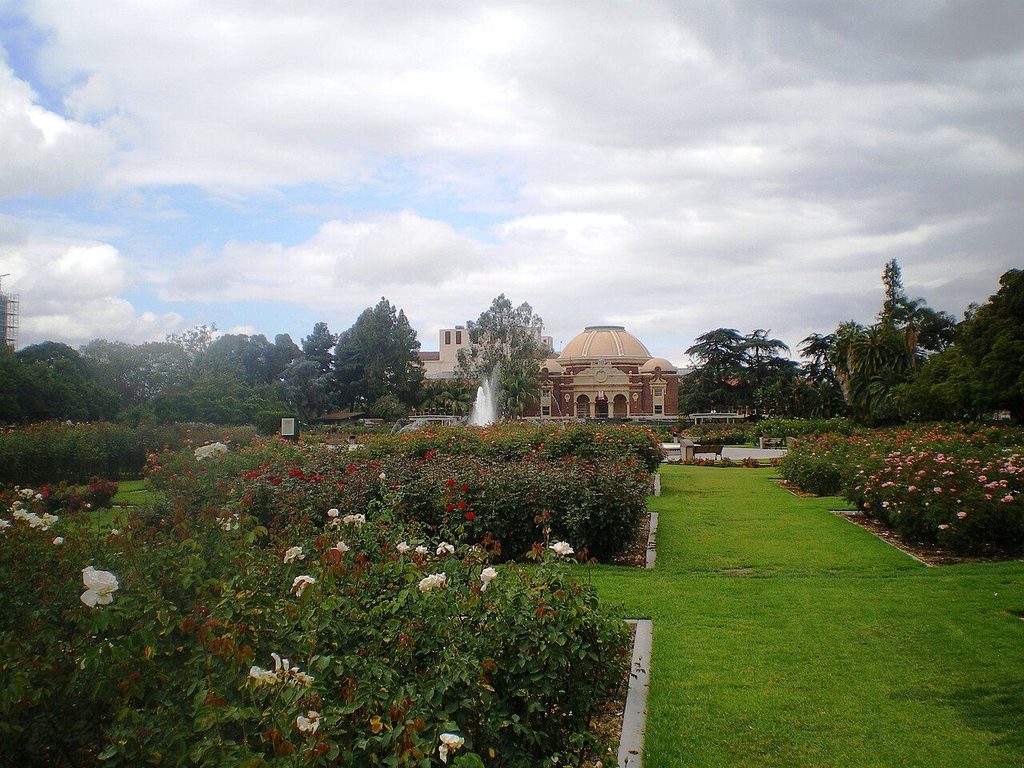
Below the domes of the Natural History Museum lies a sunken garden of long rose beds, lawns and a broad fountain, open to anyone who walks down the steps.
- MetroExpo/Vermont or Expo Park/USC, E Line
- Getting thereE Line to Expo/Vermont, then walk
- BringSun hat, water, a camera with a close lens
Exposition Park holds three museums, a stadium and a busy rail line, yet the part that slows people down is a square of roses set a few feet below the surrounding ground. The Exposition Park Rose Garden opened in 1928 on land that had been a sunken garden for some years before, and it has stayed a public garden ever since. Entry is free, there is no ticket desk, and you can walk in from the park paths or straight from the rail station on the southern edge.
The garden is laid out as a formal rectangle. Long beds run in straight lines between strips of lawn, each bed planted with a single variety so the colours come in blocks rather than a jumble. Thousands of rose bushes fill those beds, in a range of varieties that runs to the hundreds, and small labels at the bed ends give the names. Around the edges, lattice structures and gazebos give a little shade, and a ring of trees screens the traffic on Exposition Boulevard.
A garden laid out in 1928
The sunken layout is the oldest thing about the place. Old postcards of Exposition Park show the same idea: a lowered lawn framed by flower beds, with the brick and domes of the 1913 museum building rising behind. The planting has changed many times, but the shape has held, and that shape is why the garden feels calm. Standing a few steps below the paths, you see roses and sky and the museum front, and very little of the city around it.
In the decades since, the garden has been threatened at least once by plans to build on the site, and each time it was kept. It is now one of the best-known public rose gardens in Southern California, and it is cared for by the city's parks department. You may see gardeners at work in the beds on weekday mornings, deadheading or tying in canes.
The fountain and the lattice
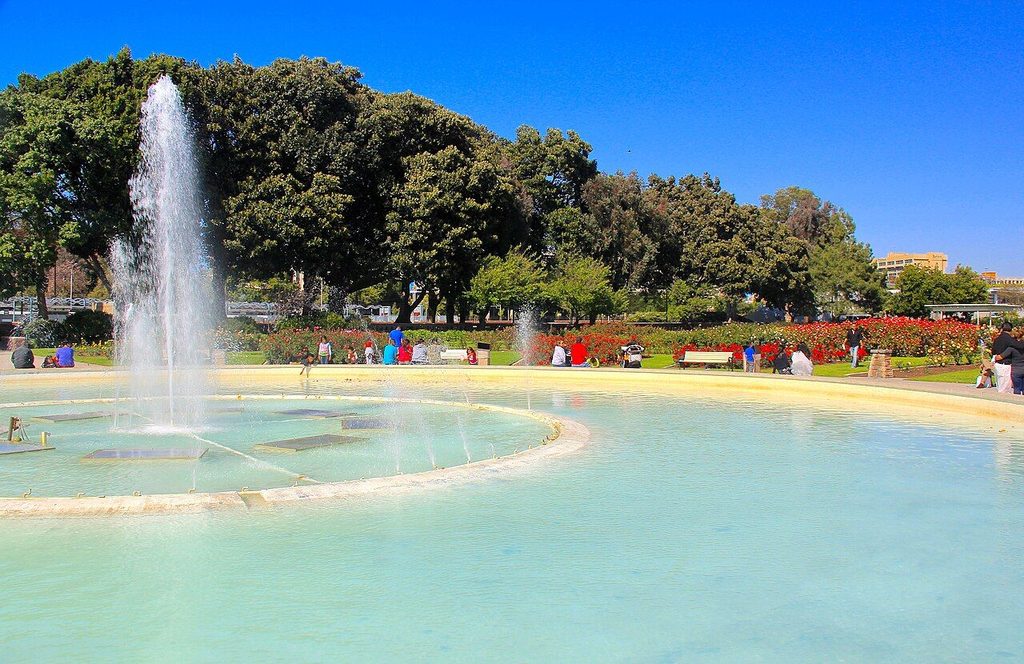
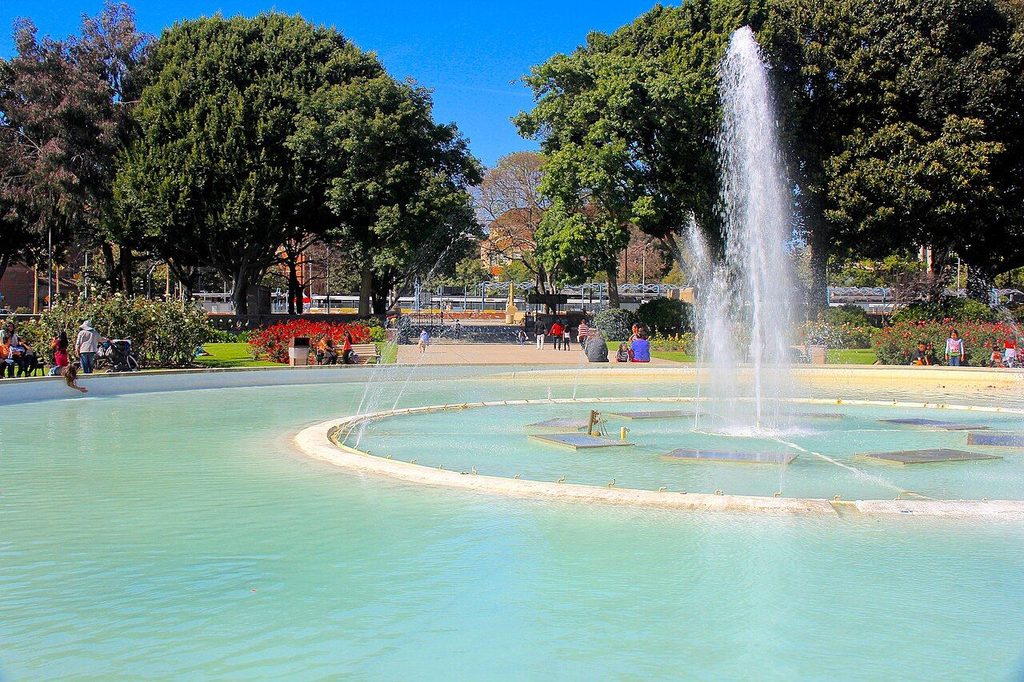
At the centre of the garden sits a wide, shallow pool with a tall jet of water and smaller jets around it. On a warm afternoon the spray drifts across the nearest beds and children lean over the rim to watch the water. Benches face the fountain from several sides, and this is the place most people settle after a slow lap of the beds.
From the fountain, the long axis of the garden leads your eye north to the domed front of the Natural History Museum, the view that has been photographed for close to a century. If you are heading inside next, our guide to the Natural History Museum and its gardens covers the rotunda, the dinosaur hall and the newer gardens on the museum's north side. The lattice and gazebos stand along the garden's edges, and in late spring climbing roses spread over some of them.
When the roses peak
Los Angeles has a long growing season, and roses here bloom for much of the year. The big flushes, though, come twice. The first and fullest arrives in spring, usually from April into May, when almost every bed is in flower at once and the scent carries across the lawns. A second, slightly thinner flush comes in autumn, often from October into November, after the heat of late summer eases.
In midsummer the garden is still green and open, and many bushes carry flowers, but strong sun can bleach the blooms by afternoon. Early morning is the best time in any season: the light is soft, the beds are quieter and the petals are still fresh. Exact bloom timing shifts from year to year with the weather, so treat these months as a guide rather than a promise.
Next door: The Coliseum and two Olympic Games
Winter pruning and closure months
Every winter the garden closes for a period so the bushes can be cut back hard, mulched and left to rest. The closure usually starts around the turn of the year and lasts several weeks, often into March, and during that time the gates stay shut and the beds are bare stems.
When the garden reopens, the first new leaves are red and the first flowers follow a few weeks later. A visit soon after reopening shows the bones of the design clearly, with the paths, beds and fountain all easy to read before the growth fills in.
Getting there and moving around
The garden sits on the south side of Exposition Park, right beside the E Line. Expo/Vermont station is the closest stop to its western end, and Expo Park/USC station is a short walk to the east. Both are on the line that runs from downtown Los Angeles to Santa Monica, which our story on the E Line from Exposition Park to the sea follows stop by stop. There is paid parking in the park's structures, but on stadium event days those fill quickly and the streets around the park close or jam, so the train is the calmer choice.
Paths in the garden are mostly level, paved or grassed, with a few steps down into the sunken section. Shade is limited to the edges, so bring a hat on bright days. Picking flowers is forbidden, and rules on dogs, bicycles and ball games are posted at the gates; they can change, so read the signs when you arrive.
Pairing the garden with a museum
The garden makes an easy first or last stop on a day in the park. It opens early, costs nothing and takes as long as you want, from twenty minutes to a long afternoon on a bench. The Natural History Museum faces it directly to the north, and the California Science Center and the California African American Museum are a few minutes' walk to the east. A slow loop of the beds before the museum doors open is a good way to start; returning at the end of the day, when the light is low across the lawns, is a good way to finish.
If you only have time for one walk outside the museums, make it this one. The roses, the water and the old domed building behind them have made the same simple scene for close to a century, and it rewards a few unhurried laps.
Filed in Inside Exposition Park
Walk on: The Natural History Museum and its gardens · all eight walks
Thanks for the photos: Los Angeles; license CC BY-SA; MikeJiroch; license CC BY-SA; MikeJiroch; license CC BY-SA


